
Two years ago, I found myself at a crossroads. I had shifted careers from Interior Design to UX/UI Design and the job hunt for a UX job proved to be very challenging (given my age). I didn’t have enough experience in the field to ask for a position higher than a junior (even with decades of other work experiences) but I also didn’t want to low ball myself into accepting something I knew I wouldn’t be satisfied with especially with regards to salary compensation. BUT I had to find a way to earn a living.
This is when I decided to blend both my Interior background and UX– which I assumed would be my sideline job while I continued the job search. I started by fixing up under utilized / unused apartments to turn them into rentable homes while also taking responsibility for the marketing and leasing of each unit. The idea initially started as an Airbnb personal project.
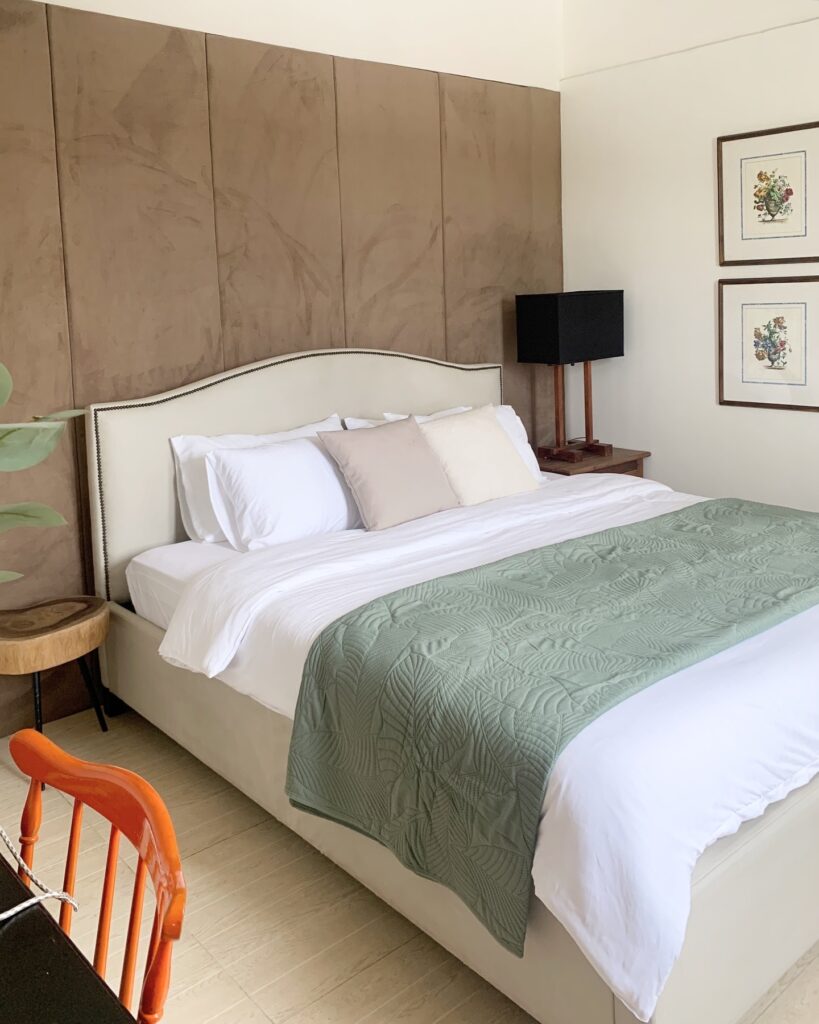
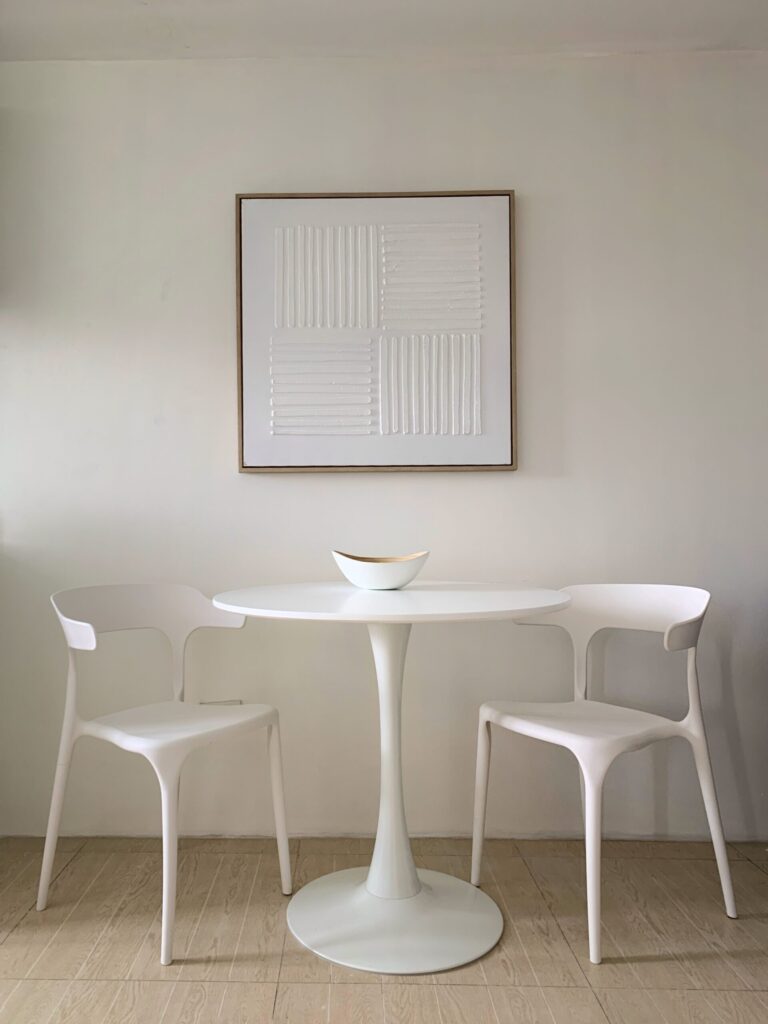
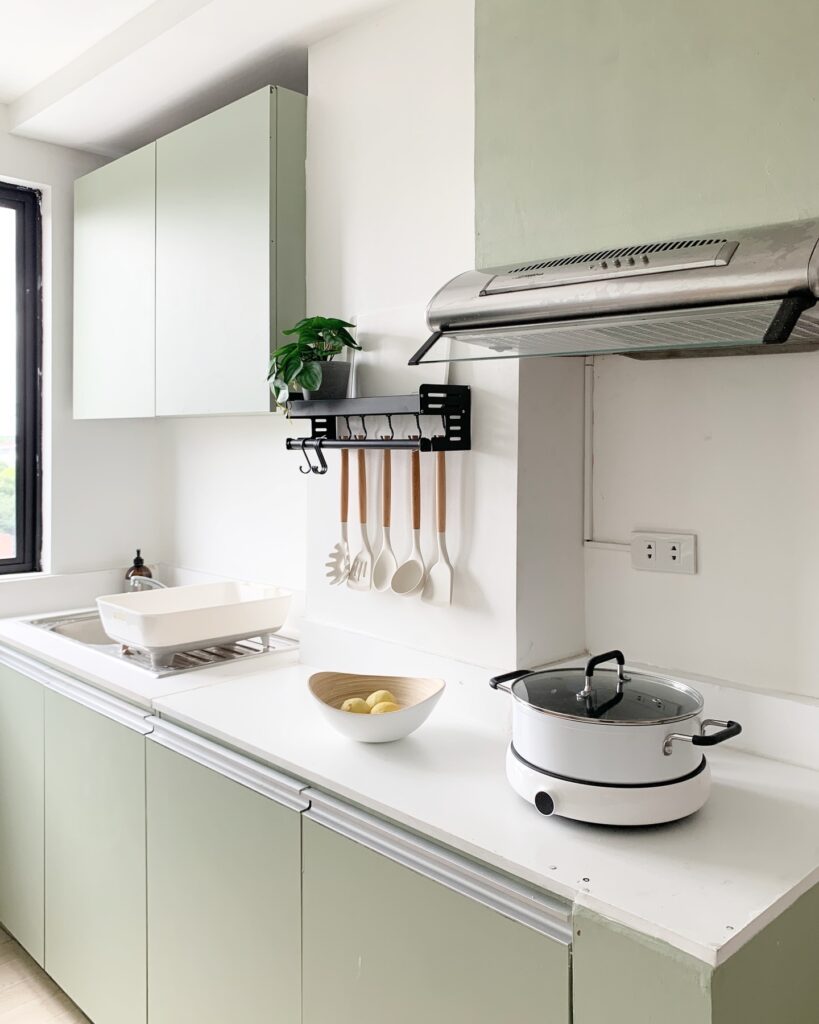
This apartment was the first one I started. I used many of the furniture pieces from my home, pieces that I didn’t want to give away yet I also couldn’t use anymore. I listed this on Airbnb, at that time unsure of the market of the location. I heard things like, “There’s no market in that area.” “Mahirap diyan.” (Translation: It’s hard there.) But my gut said, “Go!” and even with doubt, I pushed through and made it work.
The Airbnb unit turned out to be a successful project. What I didn’t realize then was how much time and effort it needed to keep up with customer service and maintenance for quality. I decided then to look for other units to fix up for long term lease. From studios to 2-bedroom units, over two years, I was able to design, renovate and lease several more.
The past two years brought lessons in business, customer experience and growth among others. Was it highly stressful? In parts, yes. Even as a solo entrepreneur, there were many people to deal with and all in different stages, such admin, the workers — because I chose to project manage my own renovations for budget purposes, the unit’s own internal issues, suppliers then later, the client themselves, scheduling, time management of viewings and move-ins… many things.
Was it worth it? Yes it was.
Here are 5 things I learned along the way:
1. Design isn’t just about aesthetics. It involves a lot of problem solving.
My practice and training as an Interior Designer taught me how to create beautiful spaces but functionality was assumed to be part of the process. Clients would usually focus on how a space looked, while us designers worked quietly behind the scenes to ensure it functioned well.
UX introduced a different way of thinking. Problem-solving came first, aesthetics second. Every decision needed a clear reason and had to address a user need.
What I eventually realized was that both disciplines strive for the same outcome, creating something that is both functional and beautiful. The difference was language and process used to get there.
User experience is in everything we do. Whether it’s navigating an app, moving through a home, or in my case, viewing and eventually leasing an apartment while listening and understanding each tenant’s needs. People are constantly interacting with experiences that have been intentionally or even unintentionally designed. It was UX that gave me a framework and vocabulary for articulating what good design had always been trying to achieve, and this is how I execute now each project I step into.
2. Customer Experience doesn’t just start in move-in day.
UX taught me that a user’s experience begins long before they use a product and the same is true in leasing.
Customer experience starts when someone sees a listing online. It continues through inquiries, scheduling viewings, the condition of the unit, communication speed, contract signing, move-in coordination and eventually— and most especially, after service or maintenance support.
I learned that a beautiful apartment could lose a potential tenant because of a poor viewing experience, delayed responses or confusing communication. A tenant could leave and get frustrated when they feel unseen or their concerns unacknowledged, no matter how aesthetically pleasing a space looks and feels. There was one case where miscommunication happened.
A prospective tenant arrived for viewing and she asked for me via the guard. The guard told another personnel and for some reason, that person did not inform me that the viewer had arrived. My phone was on silent, as I was in a meeting, but would have been able to step out to assist in viewing. I saw her message, embarrassingly, 2 hours late. She had left the condo building and by the time I messaged her, she said she wasn’t interested in going back anymore. A lost opportunity but a learning experience.
The apartment was only one part of the experience but it’s really the entire journey that really matters.
3. People rent feelings, not necessarily only the features.
There is a market for almost everything. The challenge is finding the people you’re creating for.
One lesson from both UX and Interior Design is that people often make decisions emotionally before justifying them logically. The prospective tenant’s intuitive nature kicks in the minute they step inside. It’s rare for them comment on the technical details of a renovation, instead, they would say things like:
“I can imagine myself living here.”
“This feels cozy.”
“This feels peaceful or quiet.”
“This could be my home.”
People aren’t just looking at the apartment size, paint colors or furniture. Part of the viewing experience and decision making factor is whether they could imagine a future version of themselves in the space.
The best units weren’t always the most expensive or even luxurious. They were the ones that created an emotional connection with the people who needed them. When you understand your market and design with intention, that connection naturally translates into demand.
On a business perspective, I’ve learned that growth often follows when people feel understood.
4. Assumptions are just that. Take action when needed.
One of the first things I heard when I started was this:
“There’s no market for that area.”
“Mahirap diyan.” (translation: It’s hard [to find tenants] there.)
It would have been easy to accept the opinions of others as fact then get scared and stop. But as a UX Designer, the practice has taught us to validate assumptions rather than blindly trust them. Instead of relying on what others assumed then, I was still willing to test the idea. I launched the Airbnb. I observed demand, studied the market and I adjusted. I focused on reviews and feedback and adjusted where it was needed.
Later, with the long-term rentals, I would spend days on Facebook Marketplace, I listed on relevant groups, tested again and I got the responses I needed.
The market responded differently than many people expected.
That experience reminded me that assumptions of others, whether in product design or business are not always fact and should be challenged with real-world data, experimentation and experience.
I like the saying, “If you build it, the will come.” But I’d like to revise it to, “If you build it with intention and purpose, they will come, and keep coming back.”
5. Spaces, budgets and timelines sometimes make you more creative.
The cut of a unit, its layout, size and especially the budget all play a significant role in the design process. While it’s easy to think creativity thrives with unlimited possibilities, I’ve found that constraints force better questions.
This is where the UX mindset became surprisingly useful. Instead of starting with what I wanted the space to look like, I started with who might use it.
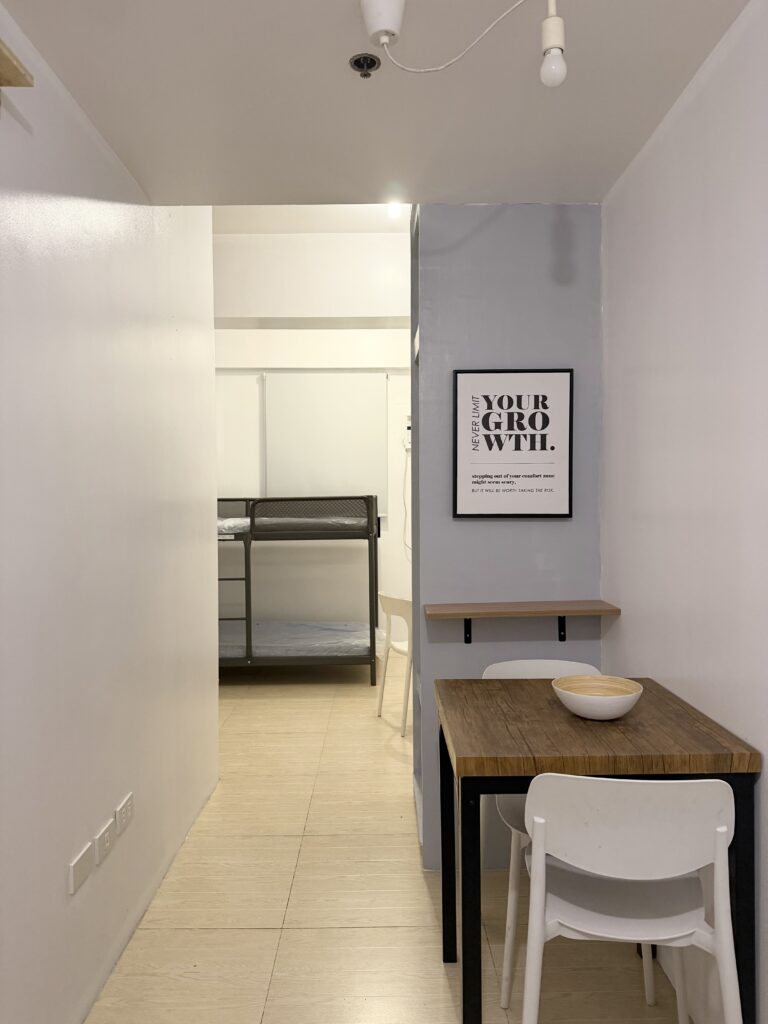
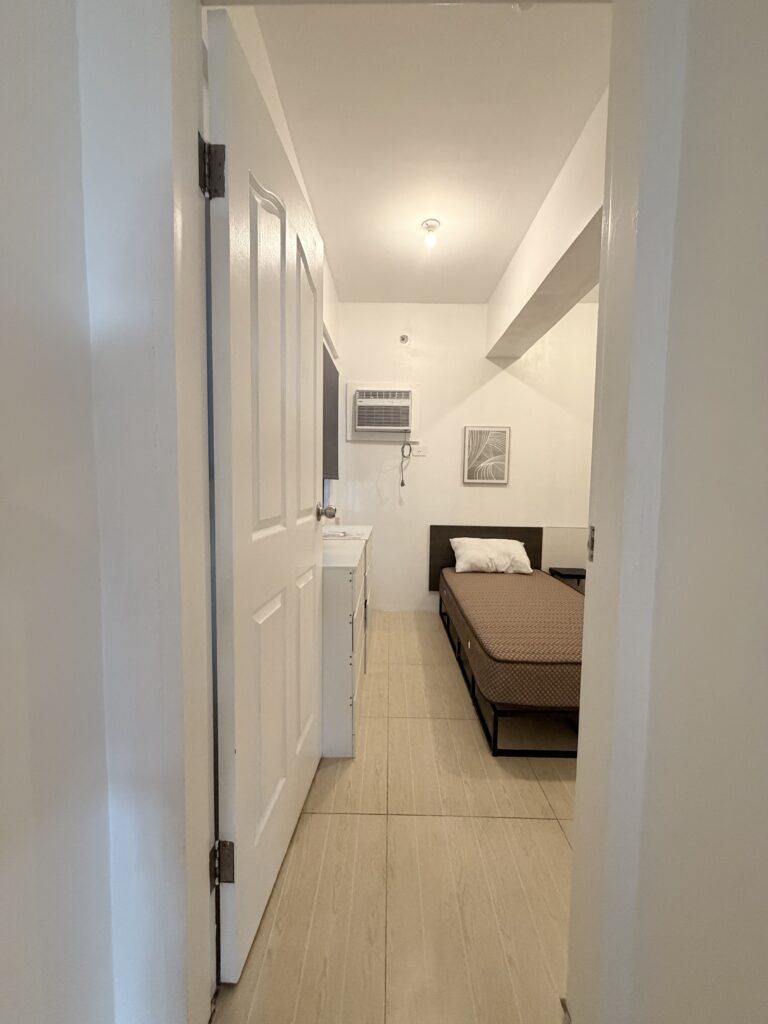
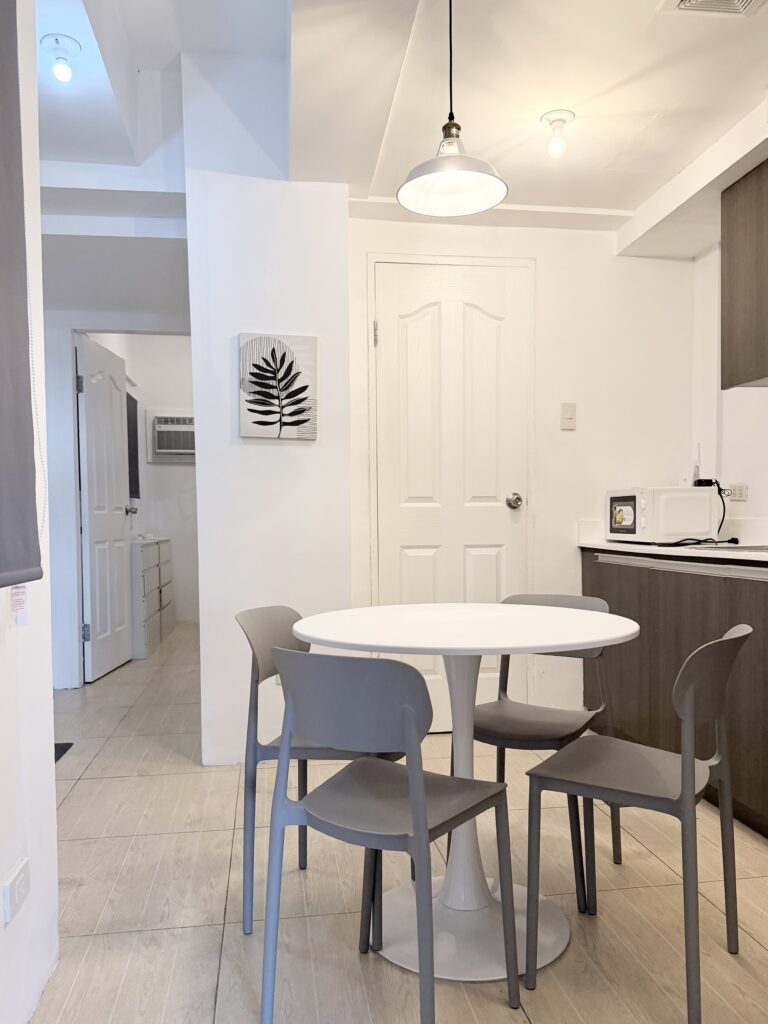
Who is the likely resident? What would make their daily life easier? Would they benefit from additional storage, a dedicated workspace, or even bunk beds? Am I designing for students, working professionals, couples, or small families? The answers to these questions shaped the design decisions.
There’s a notion that having a budget limits good design but the truth is, a limited budget doesn’t always mean sacrificing functionality. A small space didn’t mean sacrificing comfort. More often than not, the challenge pushed me to think more intentionally about how every inch of space, every piece of furniture and also every peso spent could serve a purpose.
I’ve learned that creativity isn’t always about having more resources. Sometimes it’s about making the most of what you already have.
6. Sometimes the side-project becomes the main project.
What I thought would be a temporary side business became my primary business. The biggest lesson was learning that careers don’t always move in straight lines.
I left Interior Design and entered UX because I wanted growth and a new challenge. Ironically, UX eventually led me back to Interior Design but with a completely different perspective and way of practicing. This time, I wasn’t designing for a client, I was designing for a business I was building.
By applying UX thinking to physical spaces, customer journeys, operations, marketing, and leasing, the skillsets I developed eventually complemented each other.
Looking back, I realize that none of those years were wasted. Every chapter contributed something useful to the next one. Trusting my gut and journey, I didn’t suddenly learn user-centered thinking when I entered UX Design, I acknowledged that it has always been part of my process but I learned how to name, communicate and apply it more consciously to my business, projects and in my daily habits.
Im still practicing UX/UI Design, able to work on an app project where Im given creative freedom and a timeline that has worked in my favor which has been really amazing then let’s see where it goes from here on.